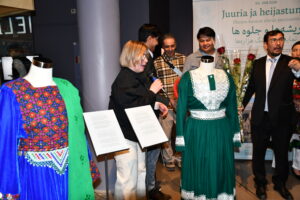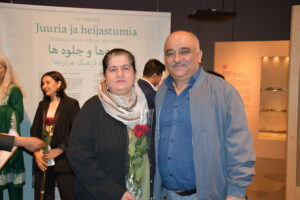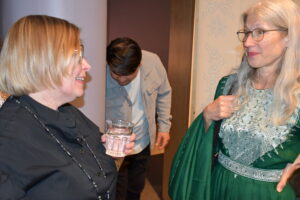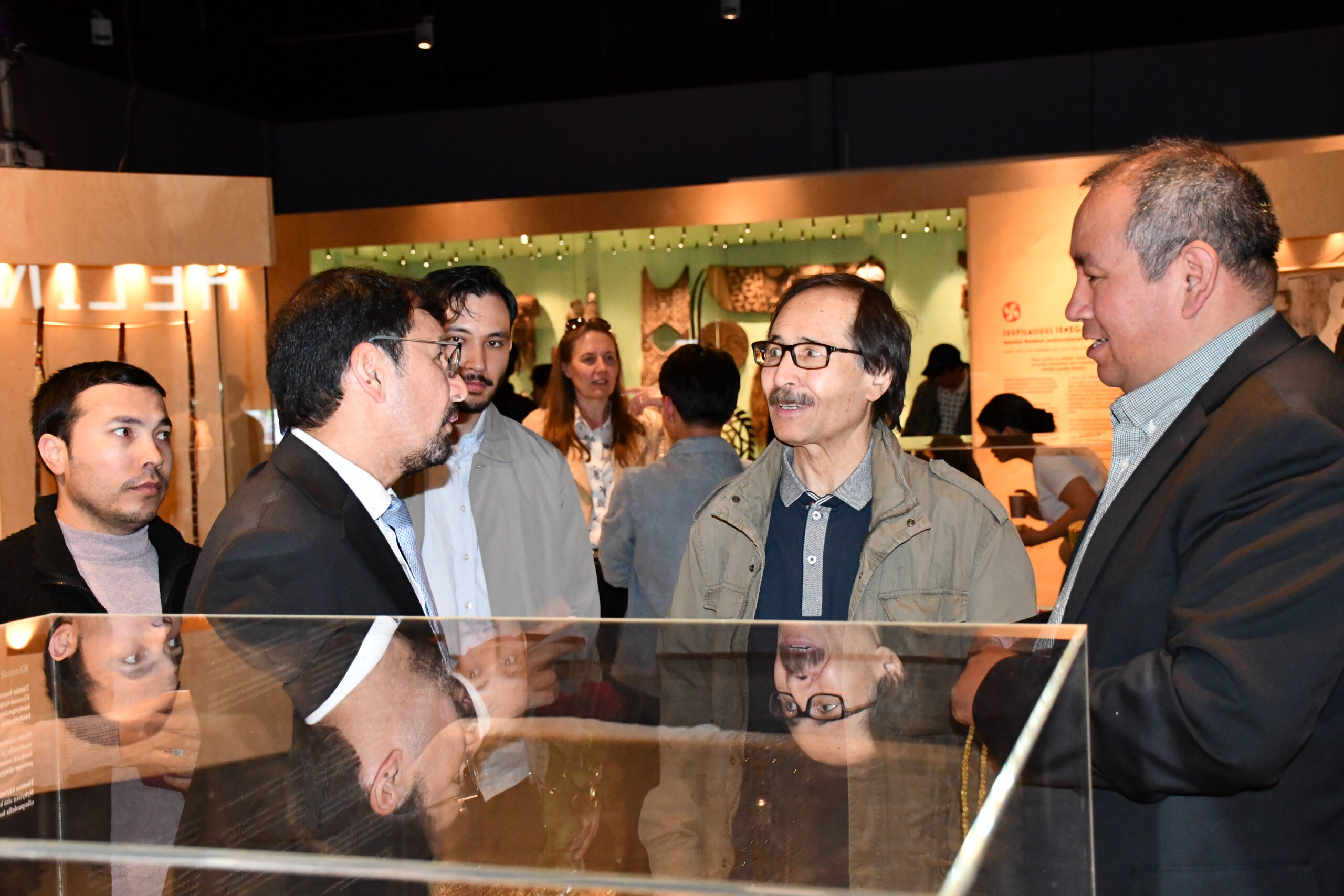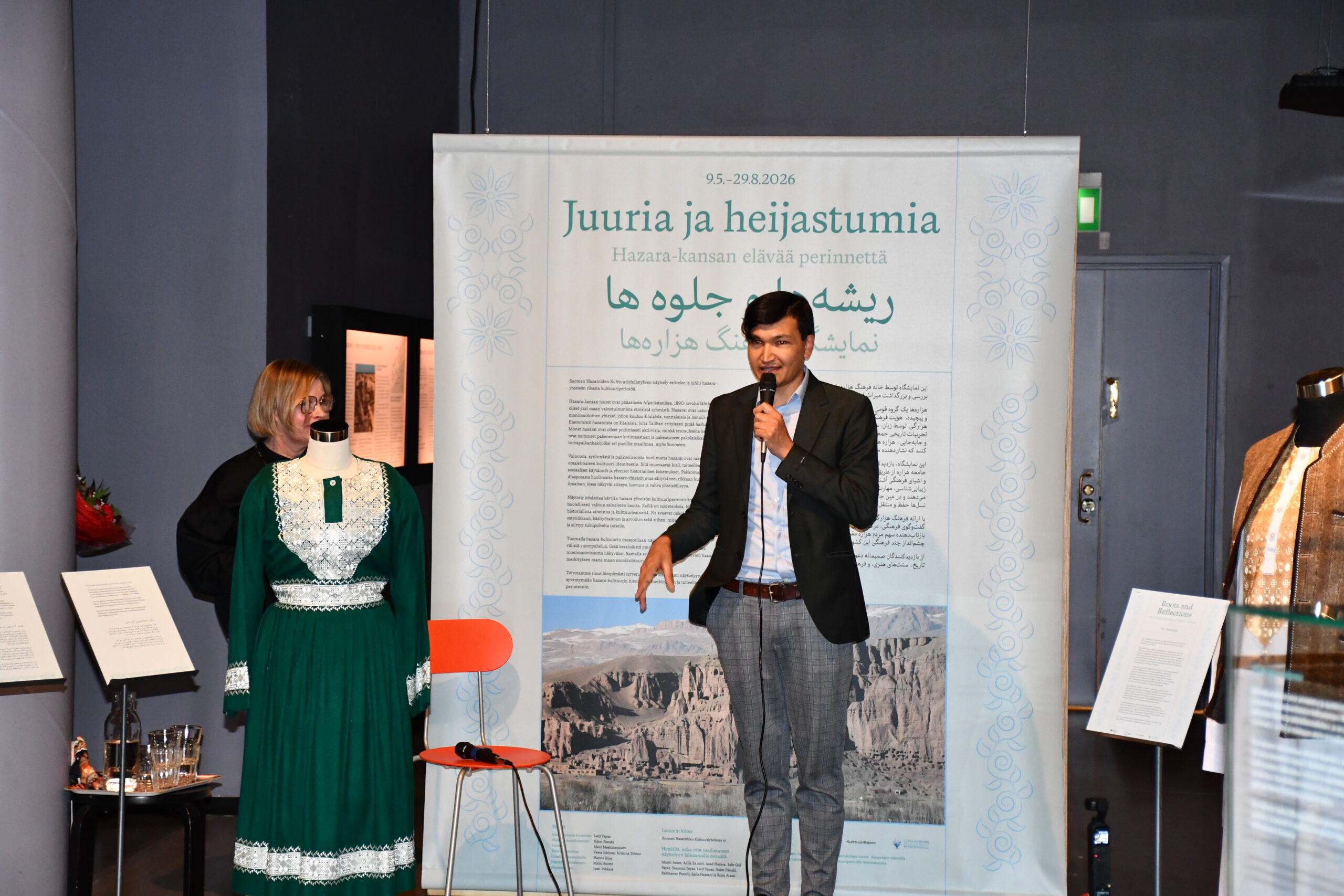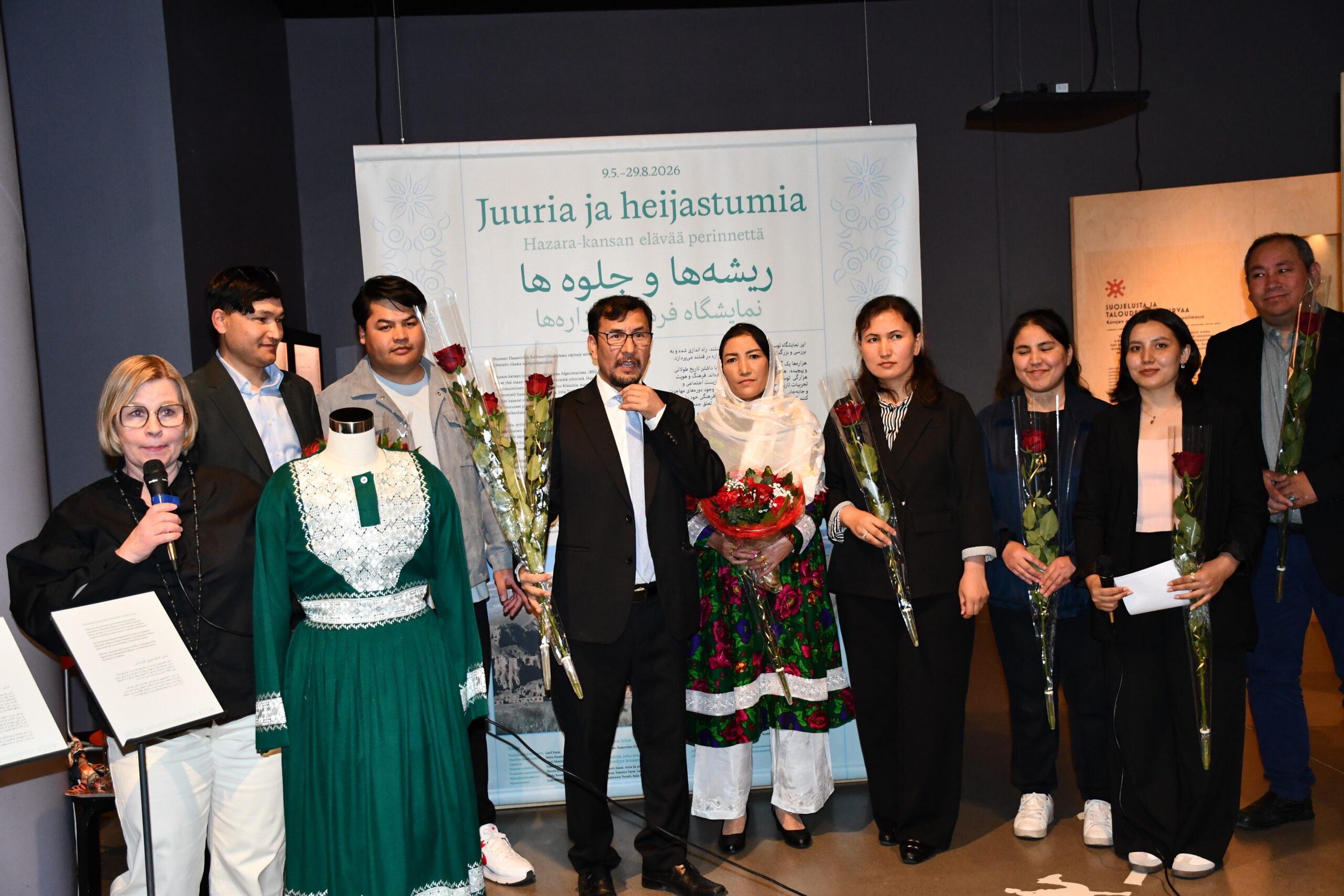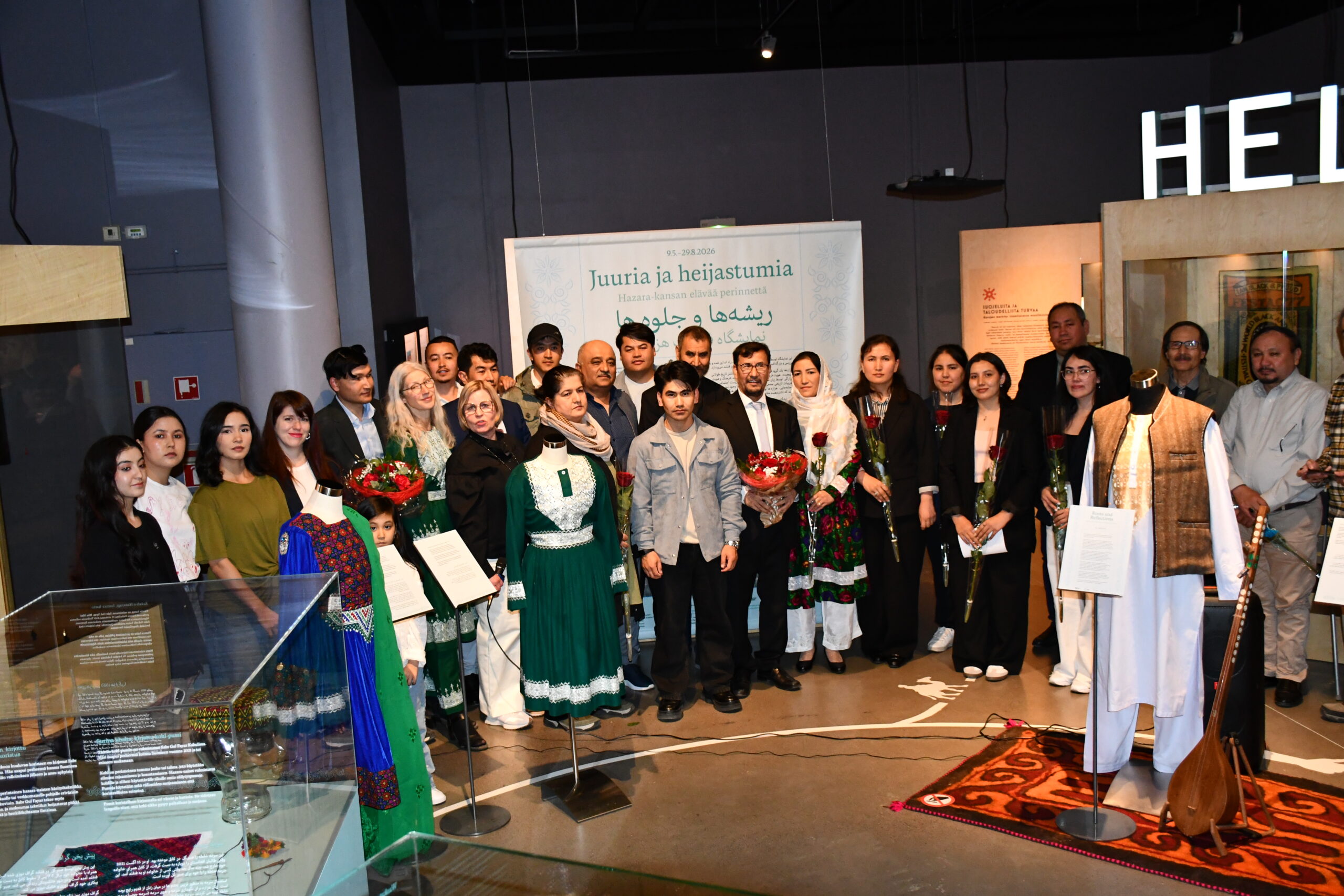
The exhibition “Roots and Reflections” was organized by the Hazara Cultural House in Finland in collaboration with the Helinä Rautavaara Museum, with the aim of introducing, exploring, and celebrating the cultural heritage of the Hazaras. This cultural initiative sought to present aspects of Hazara history, art, handicrafts, traditional clothing, and cultural identity to visitors.
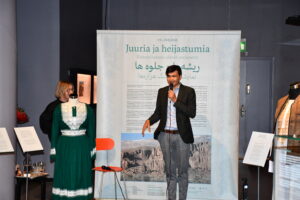
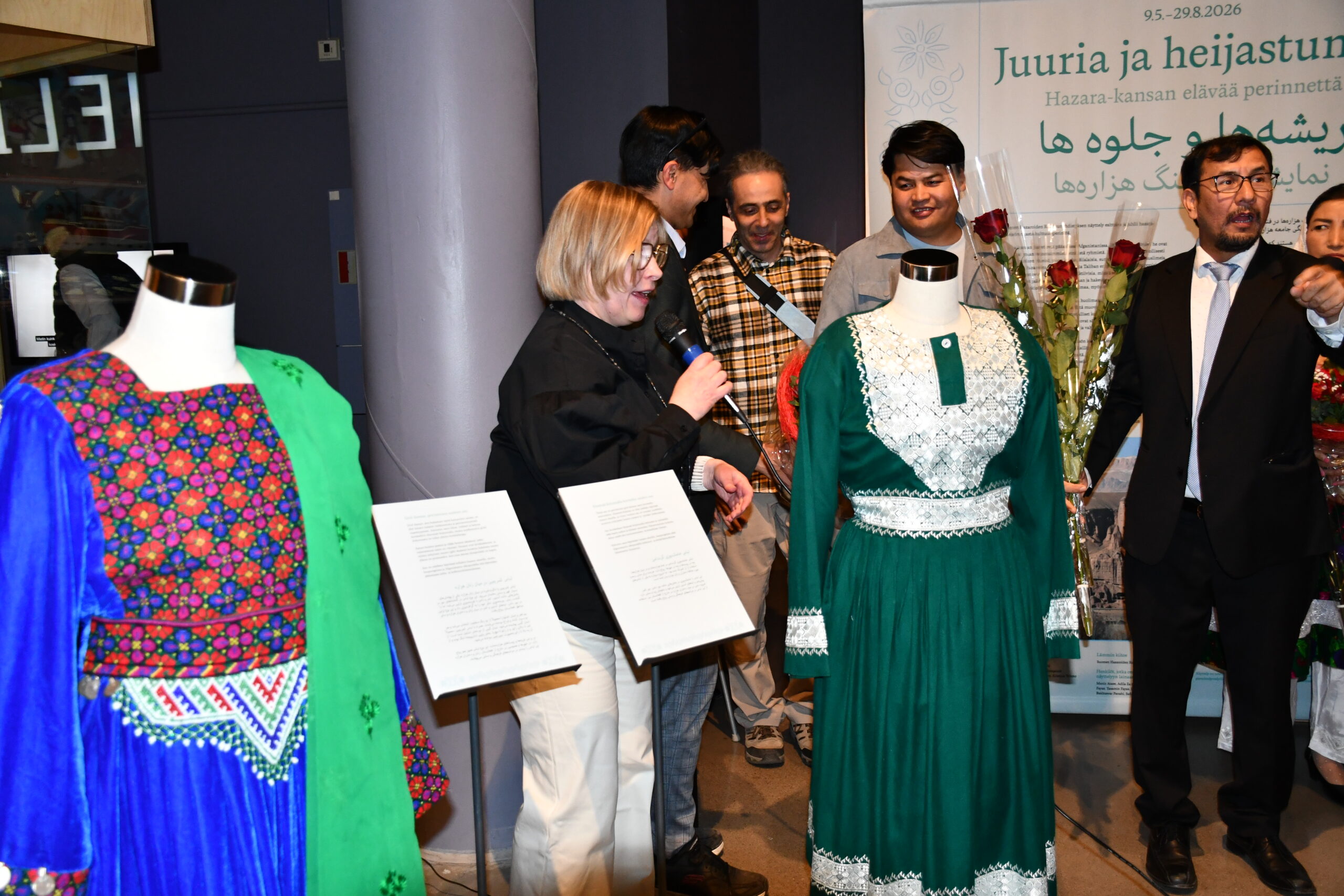
The program began with opening remarks by Ms. Ilonna Niinikangas, Director of the Helinä Rautavaara Museum, and Mr. Latif Fayaz, Director of the Hazara Cultural House in Finland. The event was hosted in Persian by Malika Alizadeh.
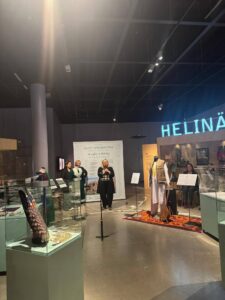
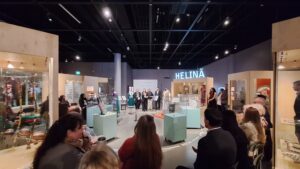
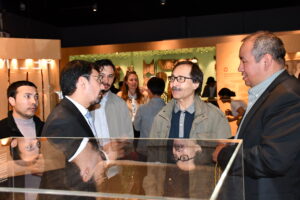
The Hazara Cultural Exhibition was officially inaugurated by Ms. Saara Hyrkkö, Member of the Finnish Parliament and Chair of the Espoo City Council. Following this, human rights activist Aziza Hosseini spoke about the importance of preserving cultural identity and the role of immigrants in enriching multicultural societies.
A panel discussion was also held with the participation of cultural, social, and political figures, including Inka Hopsu, Member of the Finnish Parliament; Eiva Tavassoli, member of the Vantaa City Council; Carina Jaatinen, human rights activist; Arzoo Ariapour, filmmaker; and Naeem Panahi, human rights activist and member of the Hazara Cultural House. The panel, titled “Hazara Culture: Resilience and Adaptability,” focused on Hazara culture, the characteristics of Hazaragi culture, and the factors contributing to the resilience of Hazara cultural identity. Each participant shared their experiences and understanding of the Hazara people and culture with the audience. Collective cooperation, peaceful coexistence, dedication to education and knowledge, and adaptability to different cultures were highlighted as key characteristics of Hazara culture. The discussion also addressed the role of culture in preserving the identity of migrant communities, the importance of intercultural dialogue, the challenges of migration, and the contribution of the Hazara community to strengthening Finland’s cultural diversity.
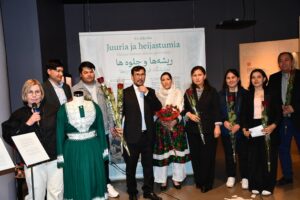
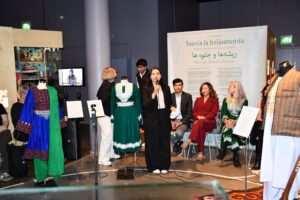
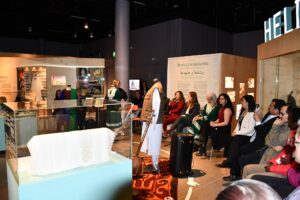
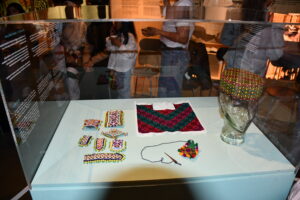
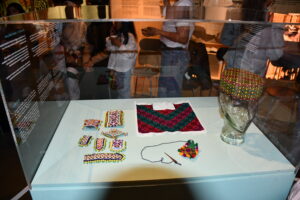
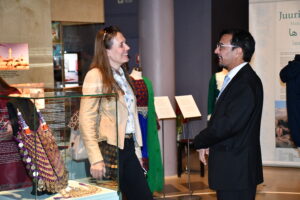
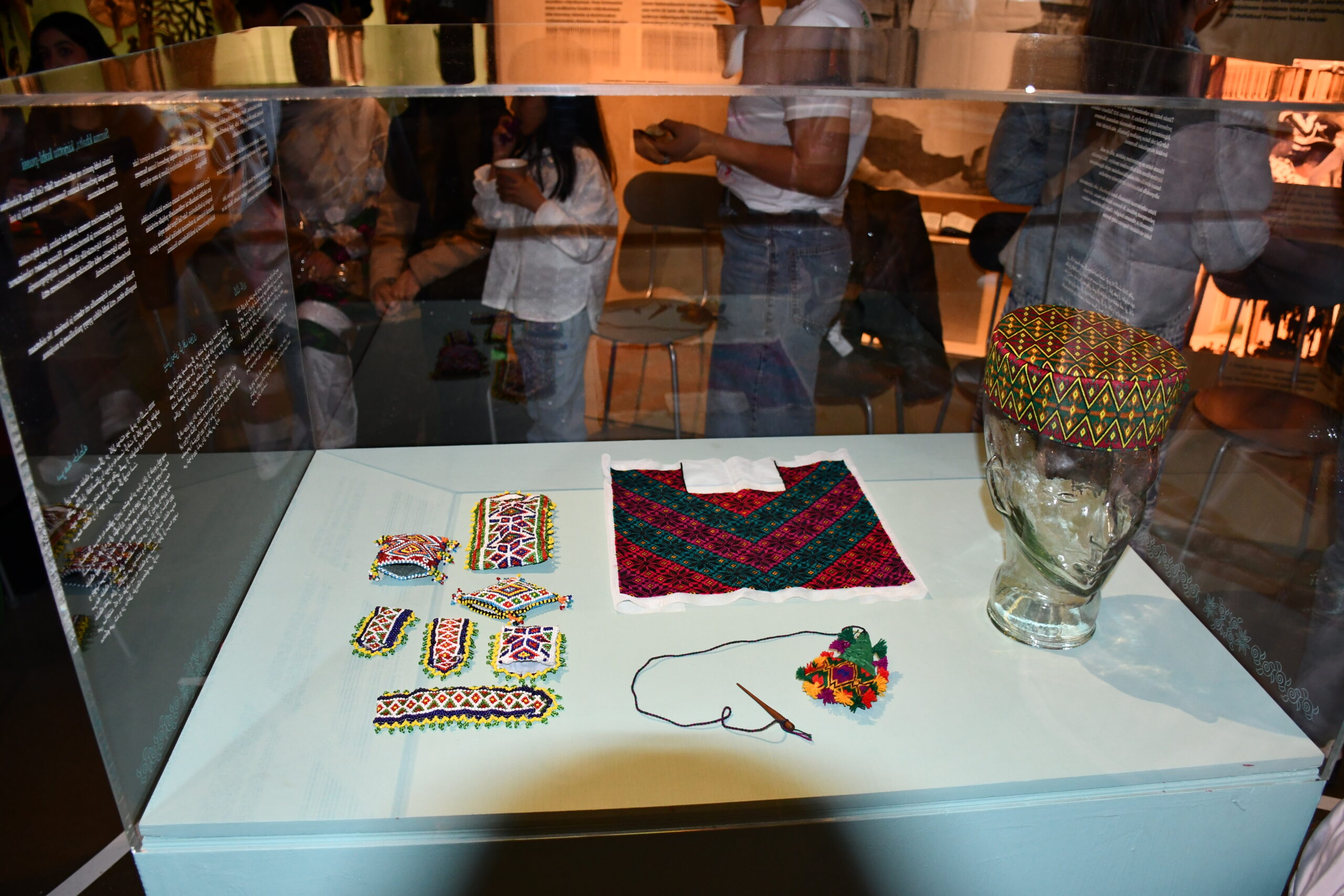
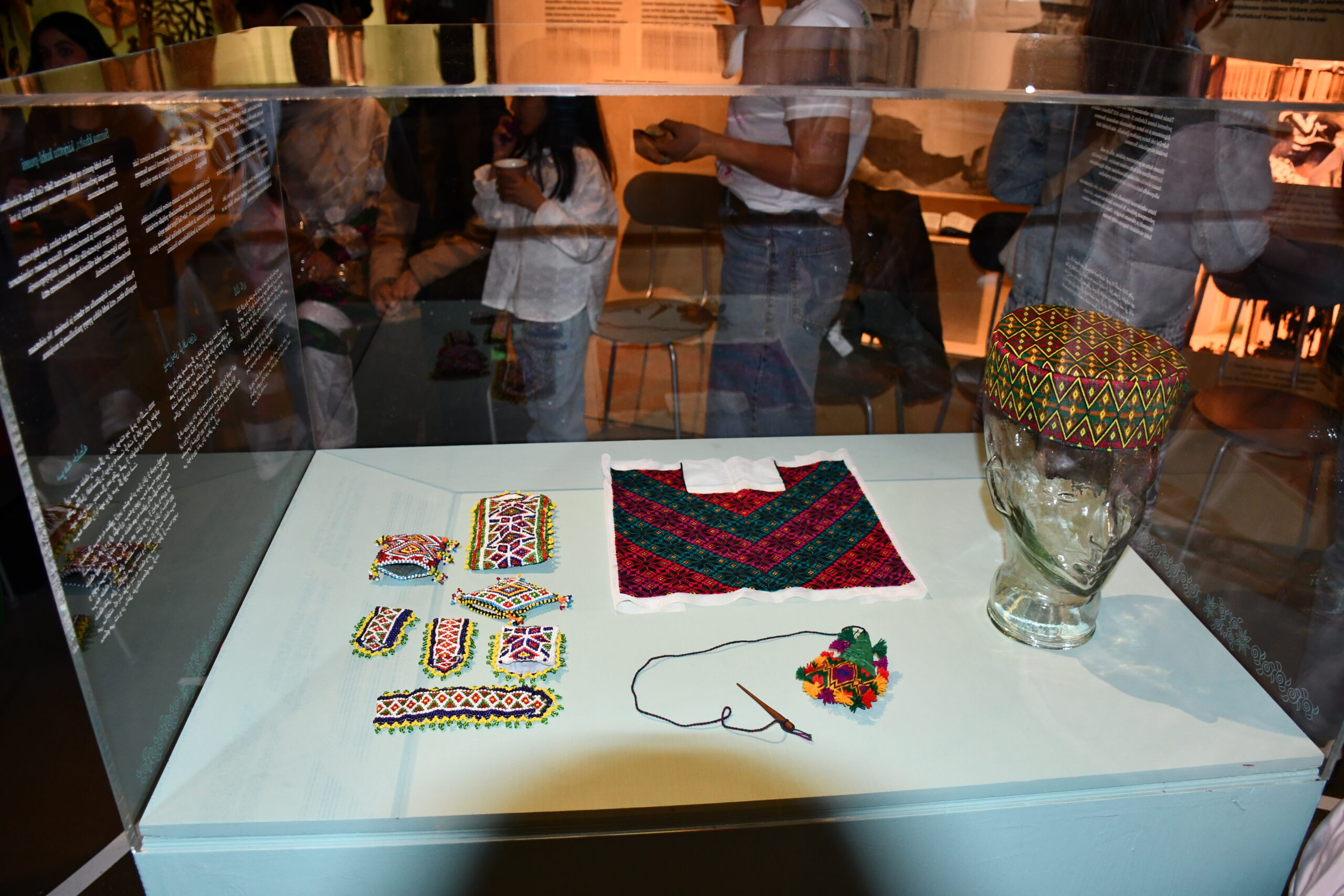
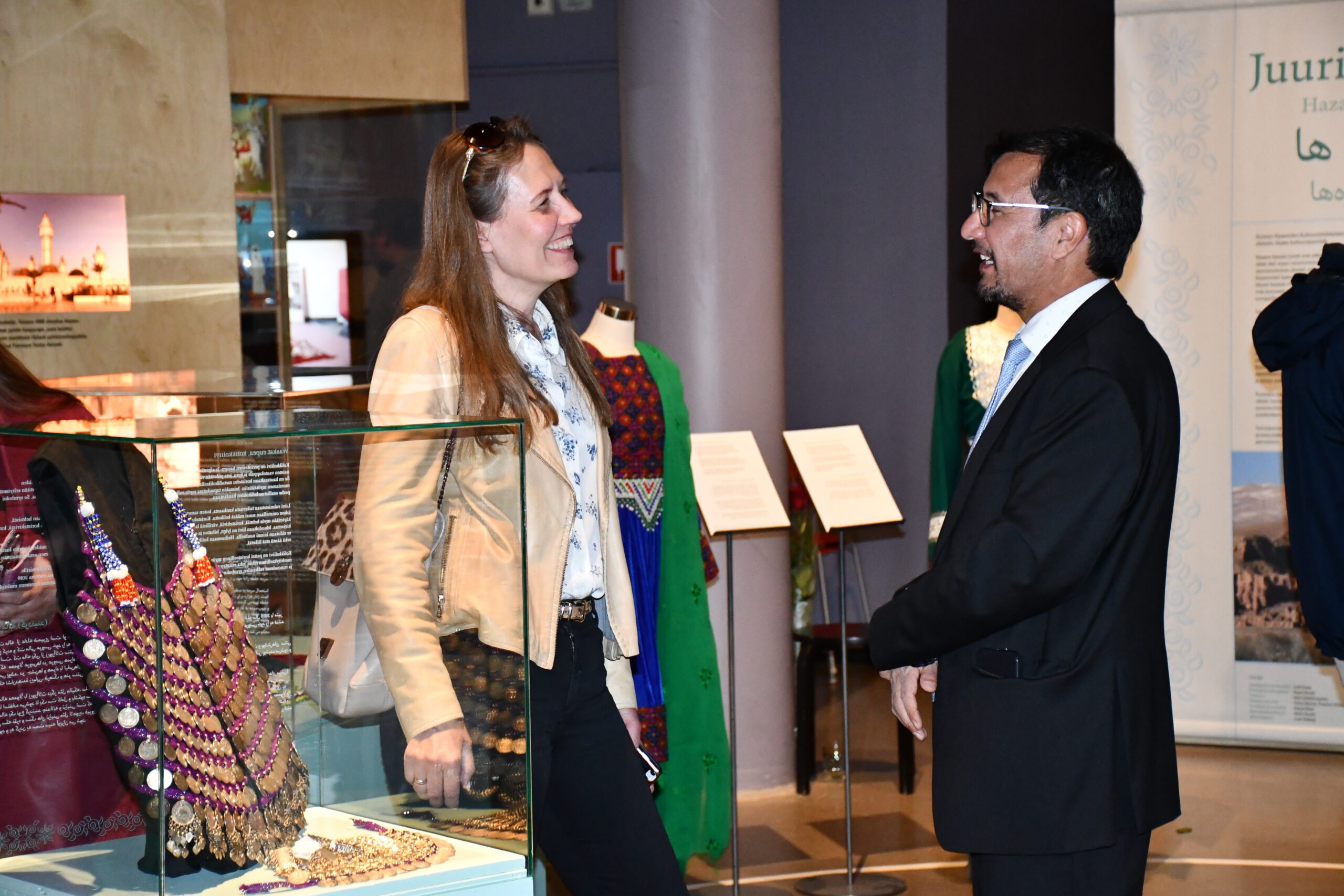
The exhibition presented a broad picture of Hazara culture and social life. The displayed works and artifacts included traditional jewellery, local clothing, handicrafts, historical objects, and cultural tools, each reflecting a part of the identity and historical memory of the Hazara community.
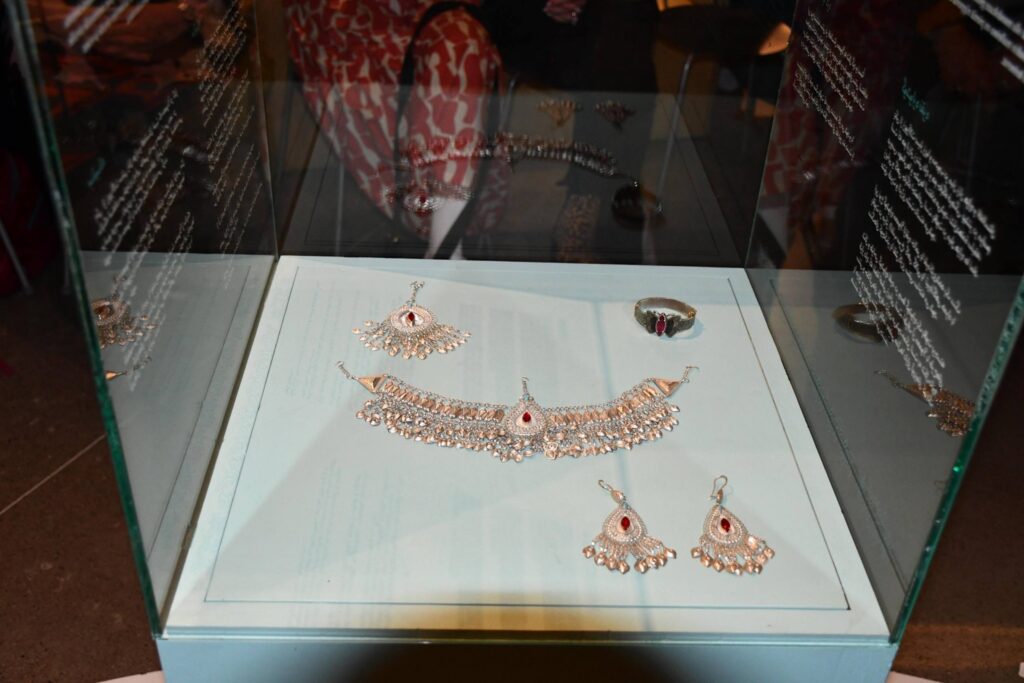
Among the exhibited items were traditional Hazara women’s jewellery pieces such as the “Matika” and “Silsila,” ornaments commonly worn during weddings, engagements, Nowruz celebrations, and festive occasions. These items symbolize beauty, cultural identity, and traditional artistry. Silver earrings with ruby stones, traditional bracelets (“Kara”), and multi-layered traditional necklaces known as “Kat-Mala” were also part of the collection.
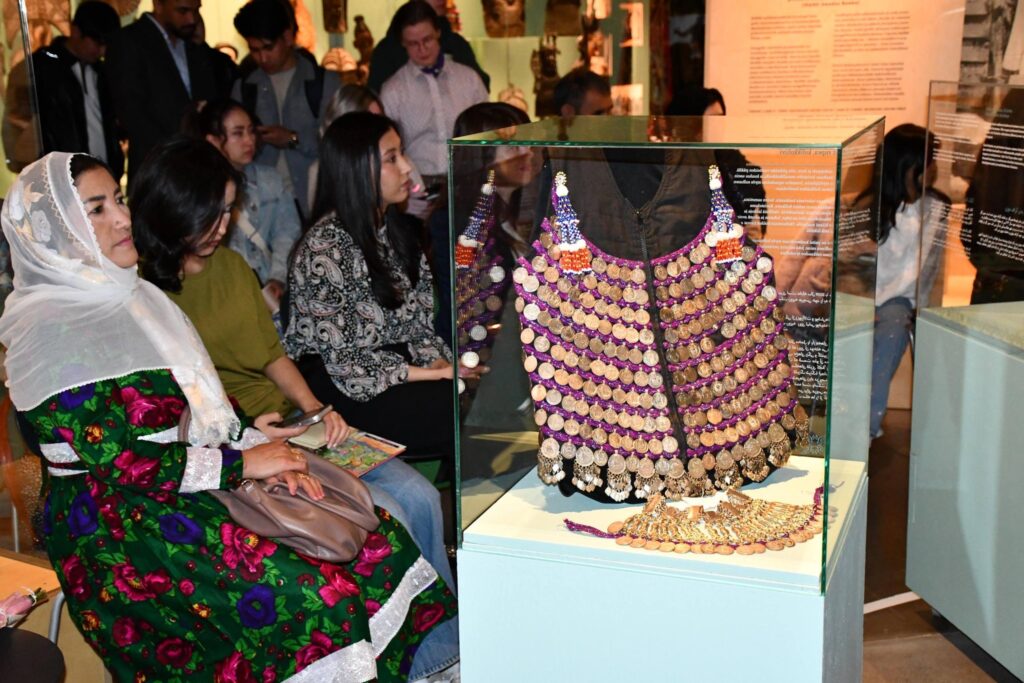
Another important exhibit was the “Waskat-e-Rupia,” a traditional vest decorated with metal coins, which forms part of Hazara bridal attire. The sound of its coins holds a special place in Hazara folklore and traditions. Another section of the exhibition was dedicated to the handicrafts of Hazara women, featuring works such as Golduzi embroidery, Khamakduzi embroidery, Graph embroidery, Surma pouches (“Kharita”), embroidered shawls, and traditional handkerchiefs. These works reflected the creativity, artistry, and significant role of women in preserving Hazara cultural traditions.
In the traditional clothing section, garments such as “Kamar-Chin,” “Gird-Daman,” embroidered dresses, and front-embroidered shirts were displayed, each representing the diversity of clothing styles and traditional tailoring in different Hazara-inhabited regions.
The exhibition also dedicated a section to the written and historical heritage of the Hazaras. The book Siraj al-Tawarikh by Faiz Mohammad Kateb Hazara was introduced as one of the most important historical sources on Afghanistan. In particular, its third volume documents the condition of the Hazaras during the reign of Amir Abdul Rahman Khan. Another featured work was The Massacre and Persecution of Hazaras during the Era of Amir Abdul Rahman, compiled by Mohammad Golzari based on British archival documents, which examines the historical oppression and persecution of the Hazara people.
In the section on traditional handicrafts, “Namad” (soft -rug) was introduced as one of the oldest forms of Hazara women’s handicrafts, representing not only practical everyday use but also an important aspect of Hazara cultural identity and traditional lifestyle.
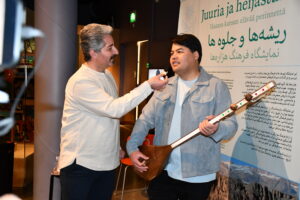
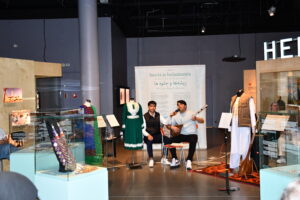
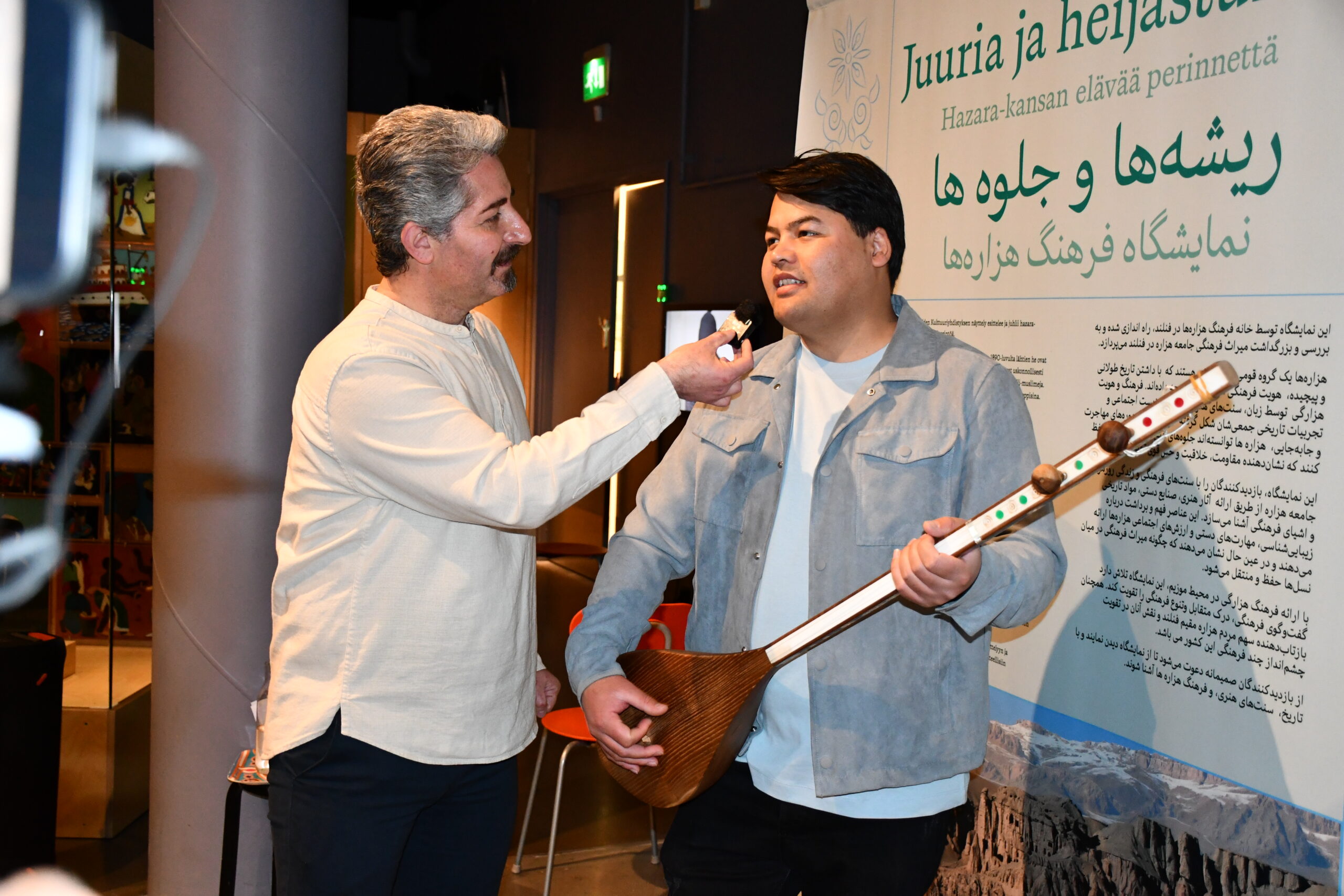
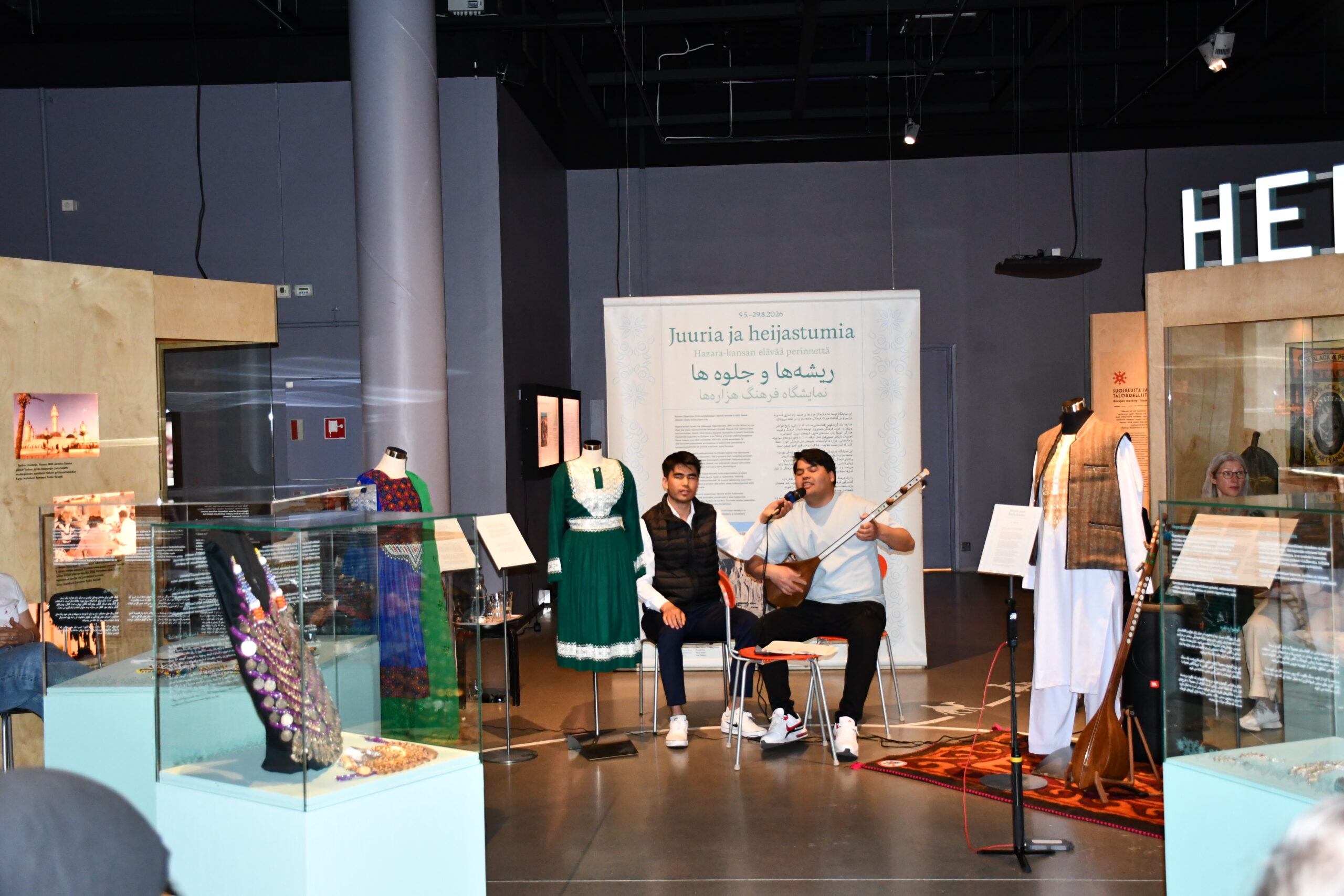
One of the exhibition’s most attractive sections focused on traditional music. The “Dambura” was presented as the symbolic musical instrument of the Hazaras, playing a central role in folk music, oral history, and cultural gatherings, and continuing to hold a special place among Hazara migrants today.
The documentary film Ancient Legacy of the Land of Azar, directed by Sami Atayee, which portrays the lives, customs, and traditions of the Hazara people, was also screened as part of the exhibition.
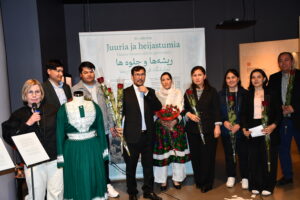
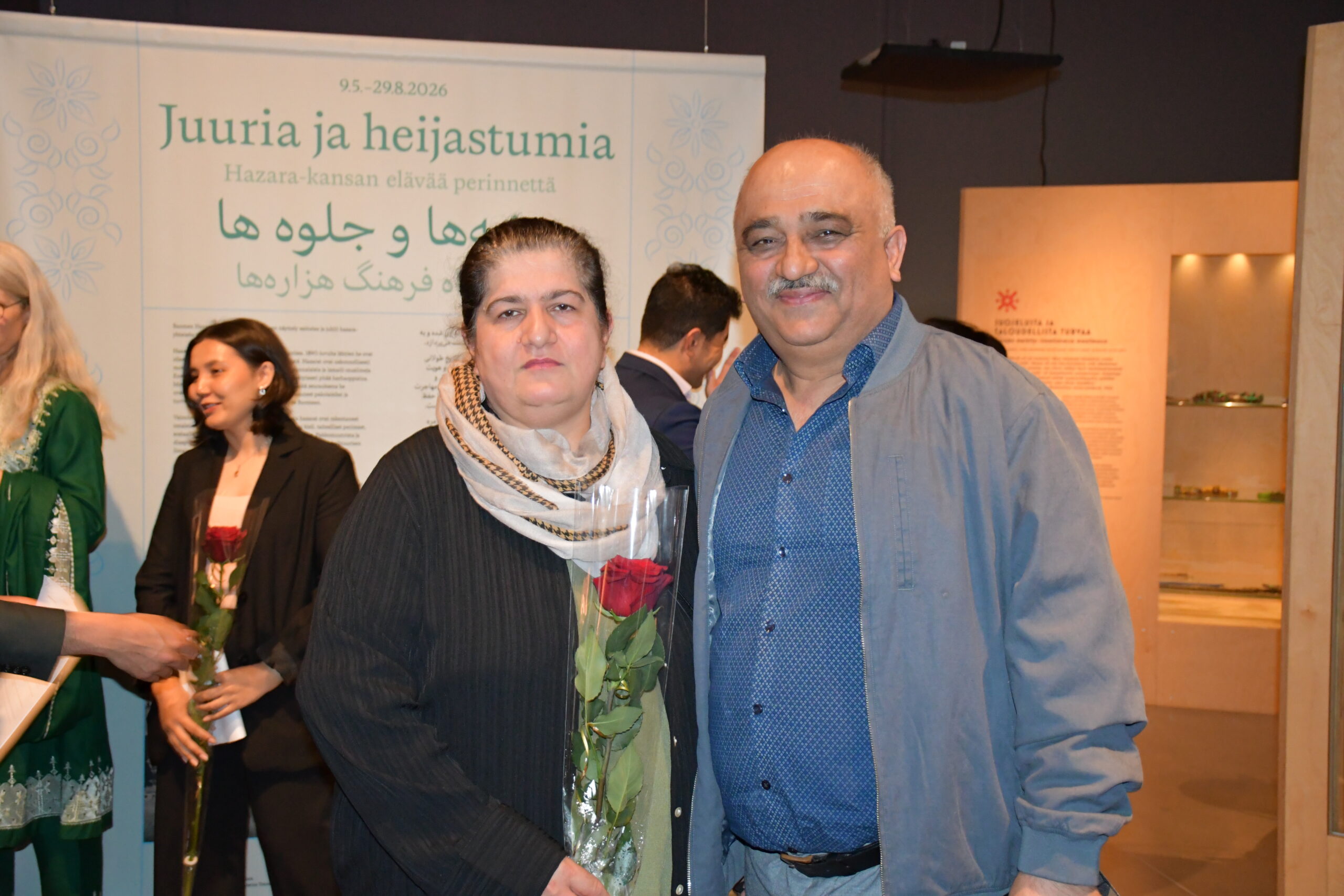
Later in the program, a poem in the Finnish language related to Hazara stories and folklore, written by Ms. Zahra Hussain, secretary of the Hazara Cultural House, was recited. The opening ceremony continued with the performance of Hazara folk music (Dambura) by the talented artist Hafiz Habibi and concluded with the presentation of flowers and appreciation to those who contributed to organizing the exhibition.
The exhibition “Roots and Reflections” was a valuable effort to introduce Hazara culture, art, and history within Finland’s cultural landscape. The program not only provided an opportunity to rediscover and celebrate Hazara cultural heritage but also created a platform for intercultural dialogue, strengthened coexistence, and introduced Finnish society to a part of Afghanistan’s cultural diversity and the Hazara migrant community.
The exhibition will remain open to visitors until the end of August.
The Hazara Cultural House in Finland expresses its heartfelt gratitude and appreciation to the Helinä Rautavaara Museum for its sincere cooperation and also thanks the Cultural Department of the City of Espoo for its support.
Finally, sincere appreciation is extended to all guests for their presence and participation.